A Fateful September Day
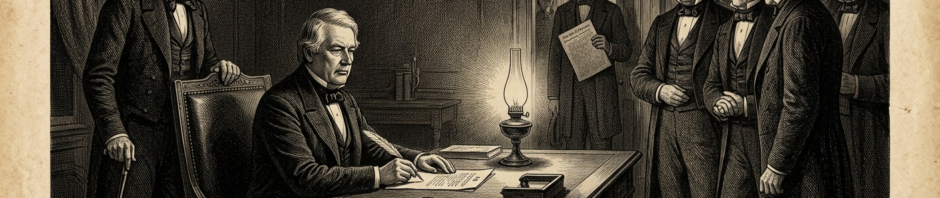
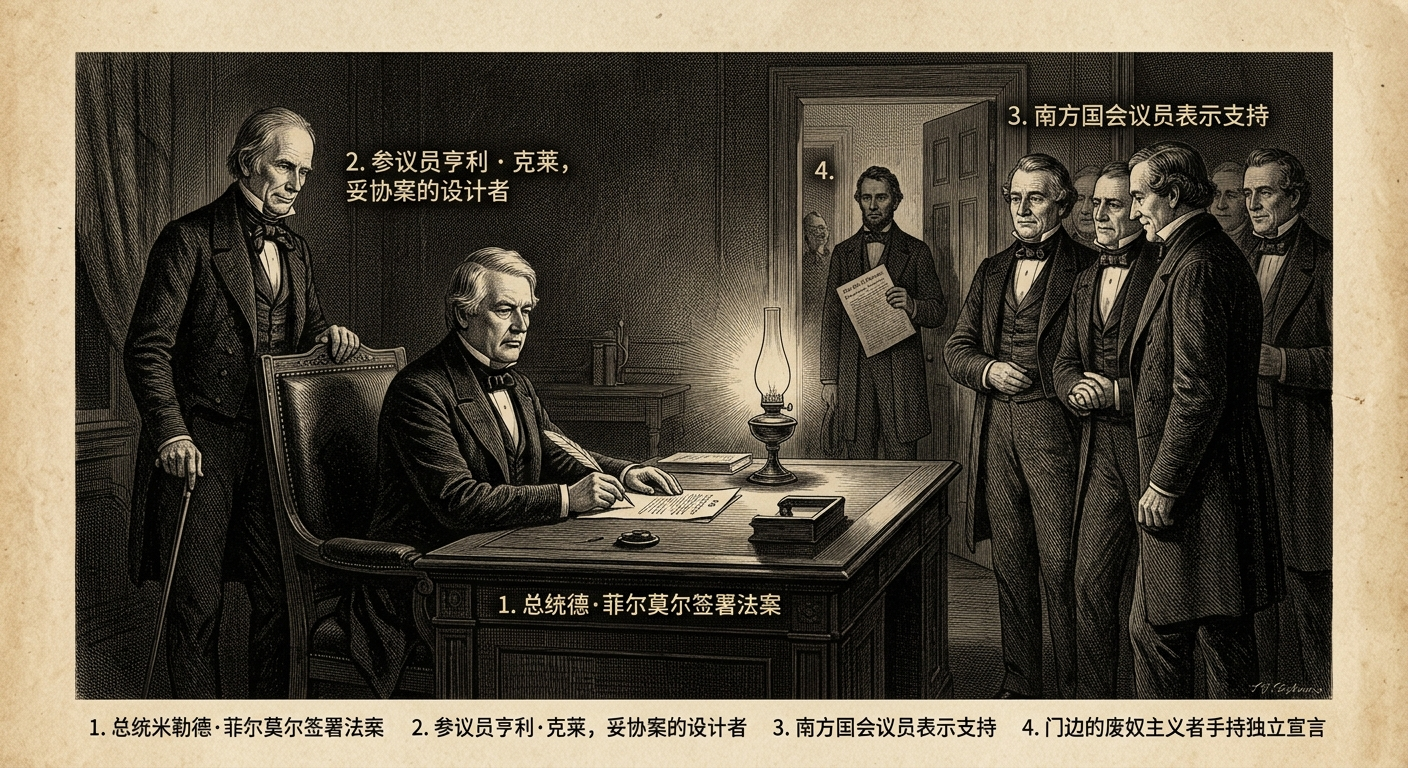
On September 18, 1850, President Millard Fillmore signed the Fugitive Slave Act into law, a piece of legislation that would deepen the chasm between North and South and push the United States closer to the brink of civil war. The act was part of the Compromise of 1850, a desperate attempt by Congress to hold the Union together. But instead of healing wounds, it poured salt into them, forcing ordinary Americans to confront the moral and legal dilemmas of slavery in ways they never had before.
The Compromise of 1850: A Fragile Bargain
By 1850, the United States had expanded westward, and the question of whether new territories would allow slavery threatened to tear the country apart. California’s application as a free state upset the balance between slave and free states. Senator Henry Clay, the ‘Great Compromiser,’ crafted a package of five bills designed to pacify both sides: California would enter as a free state, the slave trade (but not slavery itself) would be abolished in Washington D.C., and a tougher Fugitive Slave Act would be enacted to satisfy Southern slaveholders. The package barely passed, and President Fillmore, a Northern Whig with Southern sympathies, signed it into law—sealing the fate of thousands of freedom seekers.
What the Fugitive Slave Act Actually Said
The law was breathtakingly harsh. It required all federal marshals and even ordinary citizens in free states to assist in the capture of runaway slaves. Those who refused could be fined or imprisoned. Accused runaways were denied the right to a jury trial and could not testify on their own behalf. A simple sworn affidavit from a slaveholder or their agent was enough to send a person back into bondage. Federal commissioners were paid $10 if they ruled in favor of the slaveholder, but only $5 if they freed the accused—an incentive to rule against freedom. This grossly unfair system turned Northern states into hunting grounds for slave catchers.
The Resistance and the Underground Railroad
While the law was designed to crush resistance, it ignited a firestorm. Free Blacks and white abolitionists organized vigilance committees in cities like Boston, New York, and Philadelphia to protect runaways. The Underground Railroad, a network of secret routes and safe houses, expanded rapidly. Harriet Tubman, herself a former slave, made many perilous trips back to the South to lead others to freedom. In 1851, a famous case in Boston—the rescue of William and Ellen Craft—drew national attention. Ellen, who was light-skinned, had disguised herself as a white man traveling with her husband as her servant to escape Georgia. When slave catchers tracked them to Boston, abolitionists hid the couple and eventually helped them flee to England. The Fugitive Slave Act turned Northerners who had been indifferent into active resisters.
The Law’s Dark Legacy
Southerners demanded that the North obey the law, but many Northern states passed ‘personal liberty laws’ to obstruct it. These laws gave accused runaways the right to a jury trial and made state officials immune from federal fines. The conflict between state and federal authority foreshadowed the nullification crisis that would erupt later. The Fugitive Slave Act also galvanized the anti-slavery movement. Harriet Beecher Stowe’s novel Uncle Tom’s Cabin, published in 1852, was a direct response to the law—she wanted to show the horrors of slavery to a Northern audience. The book sold 300,000 copies in its first year and became a rallying cry for abolitionists. By 1860, the Kansas-Nebraska Act and the Dred Scott decision had further inflamed tensions, but it all started with that September day in 1850.
Why September 18, 1850 Matters Today
The Fugitive Slave Act of 1850 is a stark reminder that laws can do great harm, even when they are passed in the name of compromise. It shows us that when a government forces citizens to enforce an unjust law, it creates a moral crisis. The resistance of ordinary people—both Black and white—demonstrated that the arc of history bends toward justice only when we bend it. September 18 is not a date celebrated in American history, but it should be remembered—as a warning of what happens when we try to compromise with evil.