On August 18, 1920, a single vote in the Tennessee House of Representatives changed the course of American history. That day, the 19th Amendment to the U.S. Constitution – granting women the right to vote – was finally ratified. It was a nail-biter, a political drama full of backroom deals, roses, and a mother’s letter that tipped the scales. Let’s step back into that sweltering summer in Nashville and see how it all went down.
The Long Road to Suffrage
By 1920, the fight for women’s suffrage had been raging for over 70 years. The movement had its roots in the 1848 Seneca Falls Convention, but it wasn’t until the early 20th century that it really gained steam. Suffragists like Susan B. Anthony, Elizabeth Cady Stanton, and later Alice Paul had pushed, marched, and even gone to jail for the cause. Congress finally passed the 19th Amendment in June 1919, but it needed 36 states to ratify it before it became law.
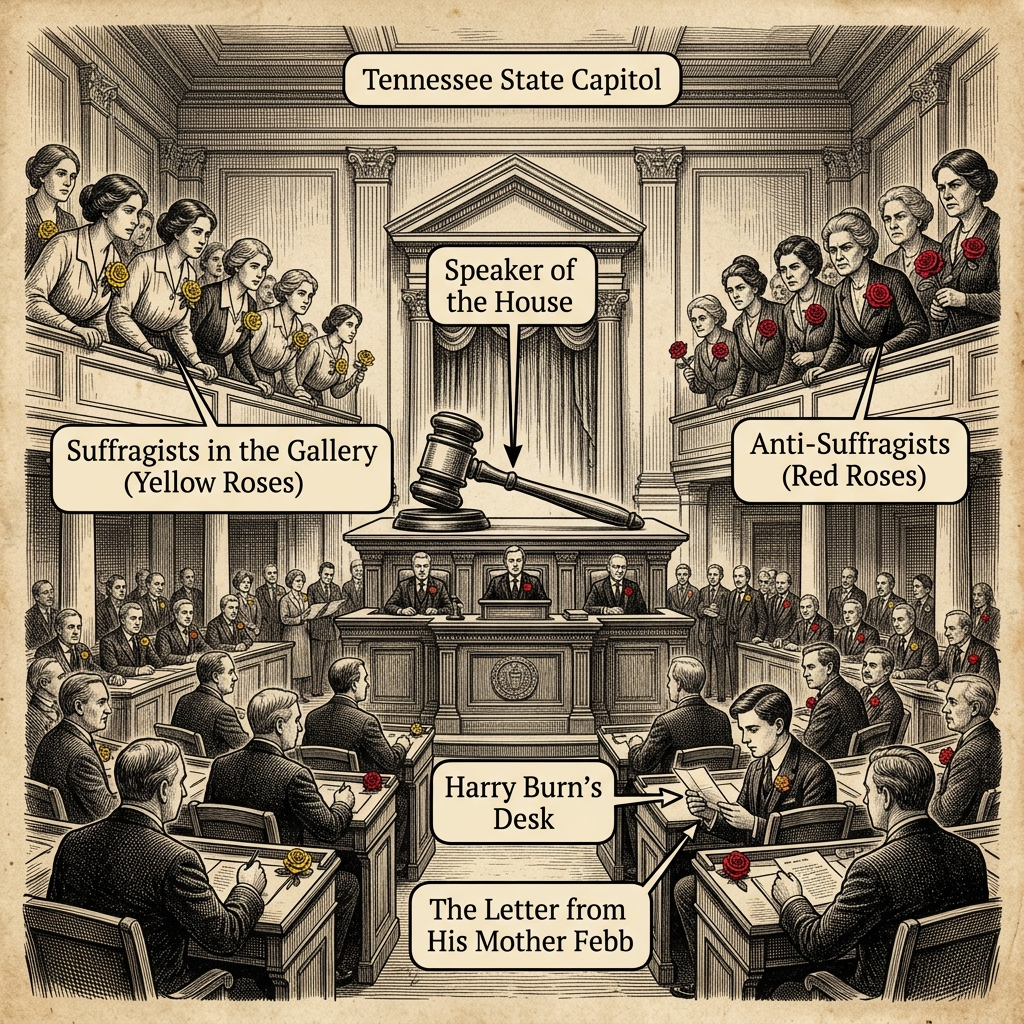
By August 1920, 35 states had said yes. One more was needed – and all eyes turned to Tennessee. The state legislature was deeply divided. Suffragists (wearing yellow roses) and anti-suffragists (wearing red roses) packed the galleries. The pressure was immense.
The Perfect 36
Tennessee’s governor had called a special session. The state senate voted to ratify quickly, but the house was a mess. The vote was expected to be a tie. Then came the decisive moment: 24-year-old Representative Harry Burn, the youngest member of the house, had been a consistent opponent of suffrage. But he had a secret – a letter from his mother, Febb Burn, who urged him to “help Mrs. Catt put the rat in ratification.”
When the roll was called, Burn voted “aye.” The chamber erupted. The amendment was ratified by a margin of 50 to 46. Harry Burn later said, “I wanted to do the right thing, and I felt that the right thing was to vote for ratification.” His mother’s letter, now famous, had turned the tide.
A Victory, But Not for All
The 19th Amendment was officially certified on August 26, 1920. Millions of American women could now vote. But the victory was incomplete. Many women of color, especially Black women in the South, were still barred from the polls by Jim Crow laws, poll taxes, and intimidation. Native American women weren’t granted citizenship until 1924, and Asian American women faced barriers for decades. It would take the Voting Rights Act of 1965 to dismantle many of those obstacles.
Still, August 18, 1920, remains a turning point. It was the day a young man listened to his mother and helped finish a 72-year struggle. The yellow roses won. And women’s voices finally entered the ballot box in a constitutional way.